



When Good Farming Practice Becomes Evidence - Helping Farmers Prove the Value of Sustainable Practices
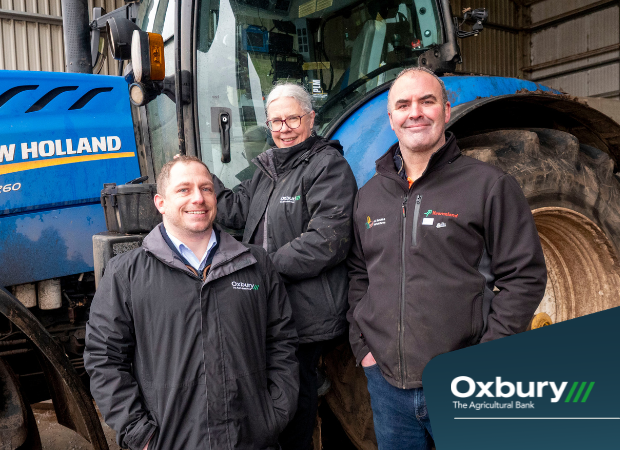
For David Bell, good farming starts below the surface. At Upper Magus Farm in East Fife, his mixed farming system is built around the idea that healthy soils support healthy crops, healthier rotations and a more resilient business.
“I grow potatoes and there's no hiding from the damage that potatoes do to your soil,” admits David. “But because we have our livestock and our farmyard manure, and because that goes into the rotation and the nutrients and that cycling, we have healthier soils and the bounce-back is so much quicker.
“As much as I'm a livestock farmer with my beef cattle, I'm also a livestock farmer with my worms, my biota, my beasties in the ground. I just enjoy the living and the growing of stuff.”
As margins continue to tighten, David is aware that relying on one revenue stream is risky and he consistently reviews ways to generate a blended income. He has an appetite for learning more about making the most out of the ground and how he can reap the returns he needs to live off his land.
Straw from the arable crops is used as cattle bedding and feed, silage is used in the rotation, and his barley is sent to be malted at a local brewery and returned.
“These little cycles are great to have. They all add up to a bigger thing. It gives you such a good feeling that you're doing good, and you know you're doing good because you have healthy soil,” explains David.
“I don't want to say it too loudly because my grandparents and parents started it – I’m just standing on their shoulders with what they have established with mixed farming.”
But while many farmers know anecdotally when their land is performing well, the growing demand from supply chains, carbon audits and assurance frameworks means that evidence now matters as much as instinct.
Oxbury’s Transition Facility has given David access to Downforce Technologies data, which provides evidence of the good work he is doing with his soil. It’s not only positive affirmation for his hard work but is supporting his supply chain relationships too.
Carolien Samson, Head of Sustainable Banking at Oxbury, says the bank invested a considerable amount of time and money into ensuring farmers could access information about the state of their soil.
“We believe farmers who are investing in soil health and improving the general soil quality will be able to withstand extreme weather events in the future, and that makes them a lower risk for us to finance.
“As much as it’s important to us as a long-term lender to the sector, the supply chain is also interested in this information because they are looking for farmers who they know will be able to supply them in the long term. The data from Downforce Technologies enables farmers to share the information with their supply chains and organisations such as LEAF.”
Soil organic carbon is not the whole story, but it is an important indicator within a broader picture of farm resilience.
By giving farmers access to better information through Downforce, Oxbury is helping build a stronger evidence base for environmental transition while also supporting better lending decisions.
For David, the value of that information is practical. He already knows he is doing a good job with his soils, but having the metrics, proof and imagery to back up what he knows anecdotally is increasingly important.
“Everyone wants carbon audits. Having the data behind the carbon audits to prove what we're doing is so helpful. Not just for my own individual knowledge but as proof to the supply chain and to help access markets, and to help make sure we're going in the right direction," says David.
In a market where buyers increasingly want proof rather than promises, data can help translate good practice into something that can be shared, understood and trusted.
This makes the Downforce element of the Transition Facility about more than measurement alone. It creates a stronger link between environmental management and commercial resilience.